If your social media feed is anything like mine, it’s currently flooded with interior design trends, quick-fix makeovers, and micro-aesthetics. While they offer a lovely dose of inspiration, much of the advice centers around shopping for highly specific pieces to achieve a highly specific “look.” But it begs the question: what about the rest of your home? How do we make a house feel whole?
During my time studying interior design in San Francisco, the most vital lesson I learned was that a truly designed home isn’t created by objects alone. It is the result of curation, cohesion, and intentional layering. Of course, elements like color palette, scale, and proportion matter deeply. But to achieve a space that feels collected rather than decorated, you have to step back and look at the larger picture first. By breaking the grand vision down into smaller intentional decisions, you naturally cultivate a more critical eye – one that inherently reduces overconsumption and impulsive spending.
So, how do you actually practice slow, intentional design in a fast-paced world?
“I wanted the house to speak first. I know that might sound a little unconventional, but I do believe homes have their own inherent stories to tell.”
Listening to the House
About four years ago, my husband and I moved across the country for his job. When we finally unpacked our boxes in our current home, I resisted the urge to rush into immediate renovations or cosmetic redesigns. I wanted the house to speak first.
Our previous home was a new construction with a clean, transitional-modern sensibility. This home, however, was entirely different: much more traditional, with distinct European influences.
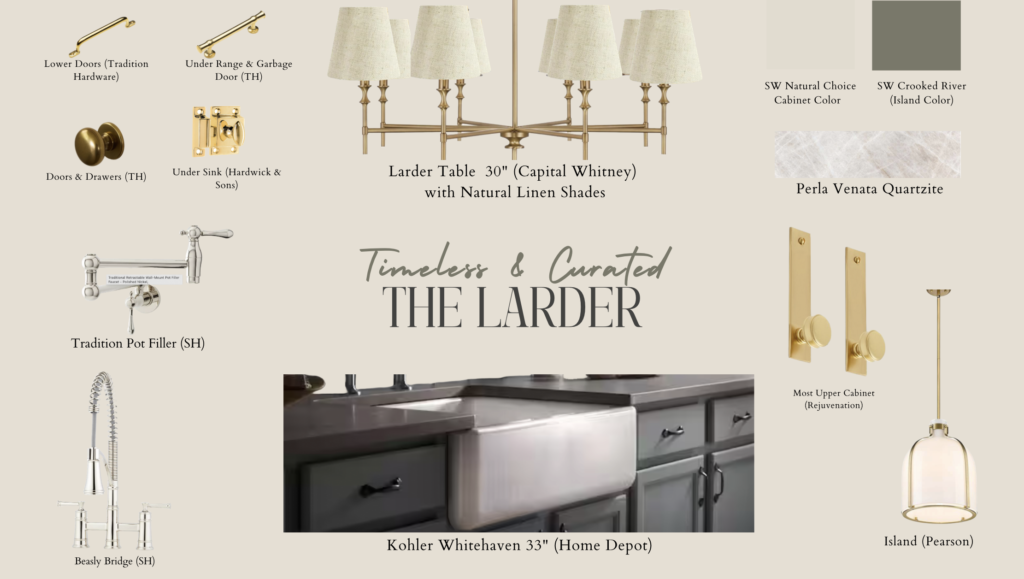
A few months ago, we decided it was finally time to begin putting our own stamp on the space. But instead of approaching each room as an isolated project, I started with a singular, guiding question: How do I want our home to feel overall? Because we are working in phases, establishing a clear design direction from the beginning ensures that every future decision—whether made tomorrow or three years from now—builds toward the exact same vision.
The Blueprint: Step-by-Step
If you are looking to bring a sense of cohesion to your own space, this is the exact framework I used to map out our home:
1. Identify the Architecture
I took inventory of our home’s architectural details as if I were stepping inside empty for the very first time. I noted the dark hardwood floors, the arched doorways, wrought iron accents, stone elements, exposed wood beams, and vaulted ceilings. Then, I stepped outside and considered the exterior.
A quick tip: If you’re struggling to pinpoint your home’s style, photograph both the interior and exterior and look at them objectively, or use AI tools to help identify the architectural roots.
2. Define the Feeling
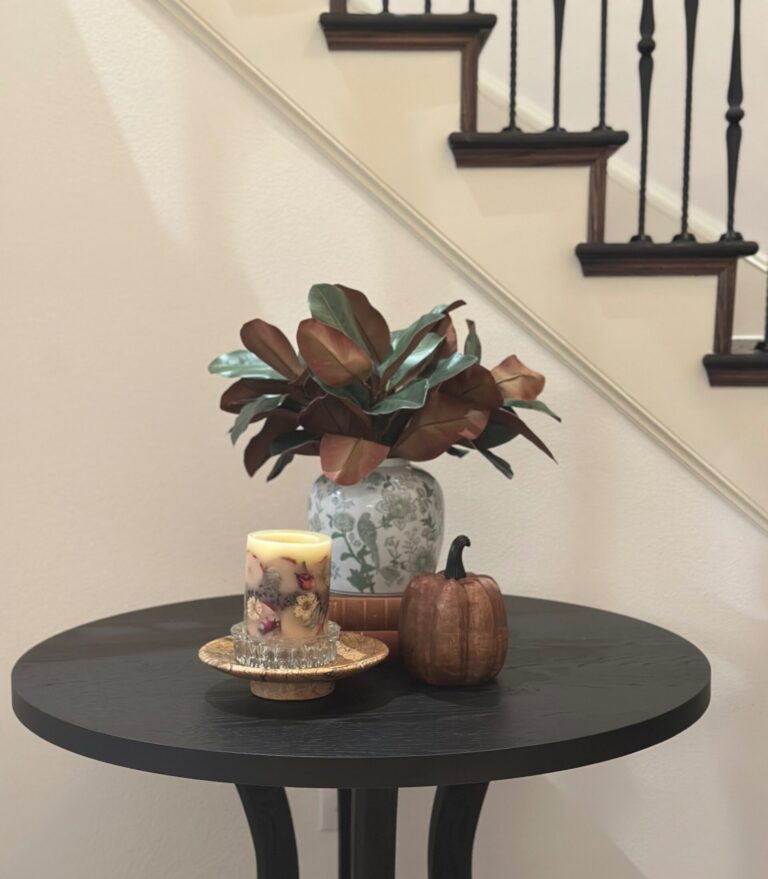
I’ve always been drawn to spaces that feel gathered over time—rooms where nothing feels rushed or overly matched. I love the thrill of the hunt in vintage shops and antique markets, particularly finding pieces that can be repurposed in unexpected ways. Think old books used as risers, or crystal salt cellars repurposed as delicate ring dishes. These small, storied details are what infuse a home with genuine warmth and authenticity.
3. Build an Organic Palette
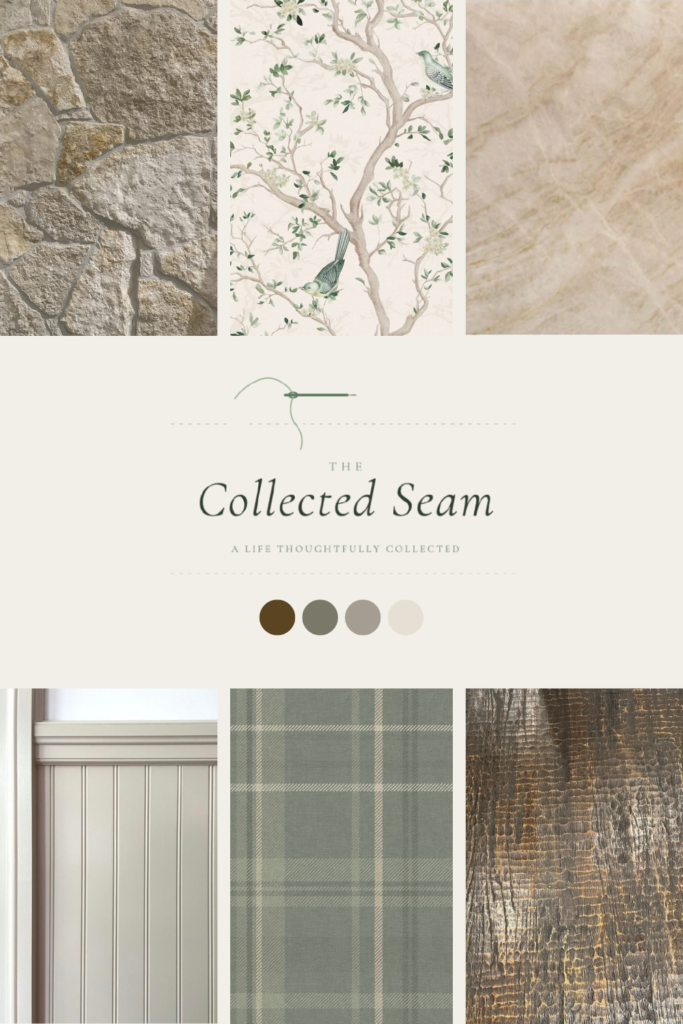
A cohesive color palette is the secret to visual continuity. For our home, I chose a dominant color, a secondary tone, and a few careful accents. To honor the traditional, European-leaning architecture, I chose a timeless, organic palette: soft creams, muted greens, rich dark wood tones, and natural stone.
4. Create a Whole-House Mood Board
Finally, I pulled these textures, colors, and inspirations into a simple digital mood board. This became my design blueprint. With that foundation firmly in place, I went room by room and mapped out how each individual space could beautifully evolve within the larger vision.
The Beauty of a Clear Direction
Now, whether I’m browsing a dusty corner of a local antique store or walking the aisles of a big-box retailer, the guesswork is entirely gone. I have a compass.
This slower, more thoughtful approach keeps me focused, intentional, and far less impulsive. Layer by layer, it is shaping our house into a home that feels deeply personal, cohesive, and beautifully lived-in — and that is more than enough.